Long-term stability issues
When orthodontic treatment is completed, patients often feel refreshed, but one of the most difficult stages from a professional point of view - retention - begins. The studies mentioned earlier (in particular Little's 20-year follow-up) have shown that stability is not a given because of the lifelong tendency of teeth to migrate.
Íme are the 3 main pillars on which the durability of treatment rests:
1. Lifetime retention (Retainer use)
The most important axiom of modern orthodontics is that teeth only stay in place as long as something holds them there.
2. Fix the retainer: This is a thin metal wire bonded to the inner surface of the front teeth. Its function is to prevent congestion of the most critical area, the lower incisors.
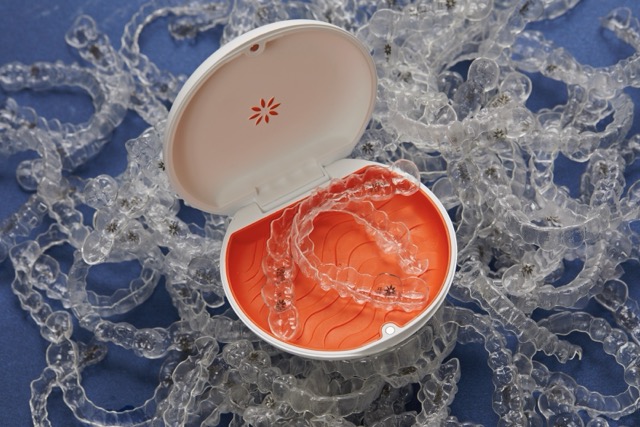
3. Removable night rail : This fixes the shape of the entire dental arch and the position of the chewing teeth.
WHY IS IT ESSENTIAL?
The bone tissue and the fibres that hold the gums together (periodontal ligaments) have a memory and spend years trying to pull the teeth back into their original, irregular positions.
Functional balance and the „Neutral Zone”
Stability is not only a mechanical issue, but also a biological one. The teeth must be in a band where the outward pressure of the tongue and the inward pressure of the lips/cheeks are in balance.
Muscle function: If the patient has poor tongue posture (e.g. tongue thrust swallowing) or mouth breathing, the muscles constantly „push” the teeth.
Respecting borders: If the orthodontist „stretches” the gum too much (widens it too much), the muscles of the lips will eventually force the teeth back, leading to crowding. The key to stability is to keep the teeth in the centre of the bony base.
Appropriate occlusion (Closure) and contact points
The stability of teeth is greatly helped when they „mesh” like gears.
Intercuspidation: When the chewing surfaces of the upper and lower teeth are perfectly aligned, the chewing force does not move the teeth but holds them in place (stabilising force).
„Stability of contact points (role of IPR): as discussed earlier, flatter, more stable contact surfaces (which can be designed with IPR), rather than point contact, make it harder for teeth to slip on each other.”
In summary, the tasks of maintaining healthy teeth in the long term
Factor | Why is it important? | Who is responsible? |
Retainer | Stops biological migration. | The patient (to be worn!) |
Muscle balance | It prevents "backsliding". | Speech therapist / Doctor |
Good closure | Makes the denture self-supporting. | Professional decisions of the doctor |