When profession meets passion / Dr. Sarolta Kovács, Orthodontist, Founder of KS Orthodontics and Dental Studio
The beginnings
Even during my years at dental university, I felt particularly drawn to fPrecision and complexity of regulations. Technical knowledge alone was not enough – I was always interested in how a smile affects a person's self-esteem, everyday health, social relationships, and even their life path. Orthodontics not only aligns teeth, but also changes lives. It was this realisation that ultimately led me to pursue further education in this field.
The turning point
The real turning point came when a teenage patient told me after treatment that Firstly, because he smiles openly in front of his classmates. This experience reinforced my belief that orthodontics has a deeper dimension: it is not just a medical procedure, but also a a catalyst for the full development of personality. From that moment on, I knew that this was the profession I wanted to pursue, and that this was the comprehensive approach I wanted to represent.
During my specialisation, I paid particular attention to not only developing my technical skills, but also understanding facial anatomy, aesthetic proportions and the basics of harmonious smile design. For me, orthodontics has always been an interdisciplinary field that combines medicine, aesthetics and psychology. This holistic approach has guided my career development and continues to define my work today. In addition, I am currently particularly interested in the field of prevention.
Today, we know that crowded teeth and bite abnormalities affect almost the entire population of the Earth in a pandemic-like manner. This is why it is particularly important to identify and treat not only the symptoms, but also the underlying causes.
Smile design: the thinking behind the visible result
Custom design
Every smile is as unique as a fingerprint. When designing a smile, I take into account the shape of the face, the natural line of the lips, the visibility of the gums and the patient's personality.
Aesthetic harmony
I not only arrange the teeth, but also create the overall aesthetic balance of the face. The principles of the golden ratio, symmetry and natural beauty are all part of the design process.
Functional perfection
A beautiful smile is not worth much if it does not function properly. Therefore, optimising bite, chewing and joint functions is just as important as aesthetic considerations.
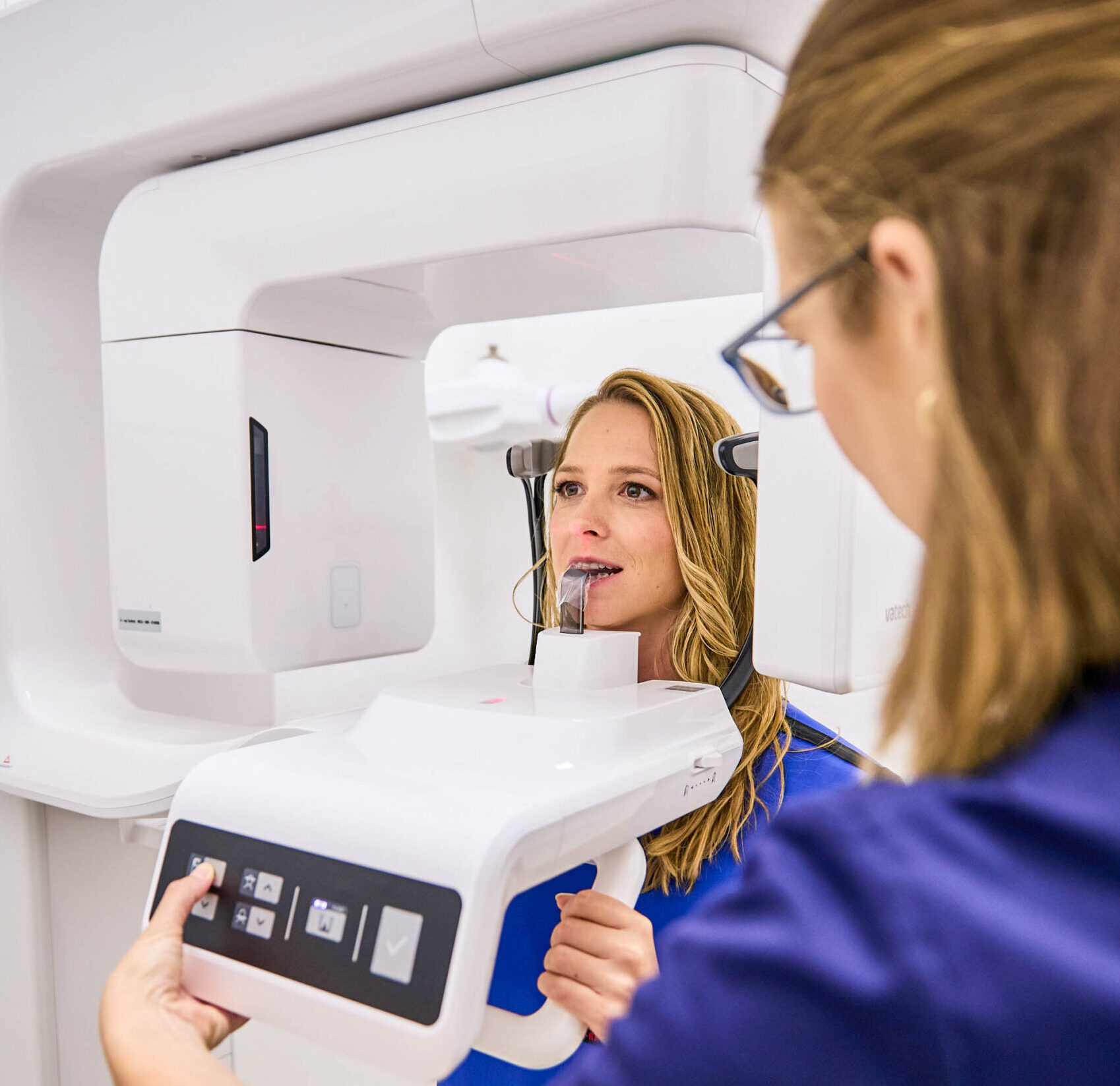
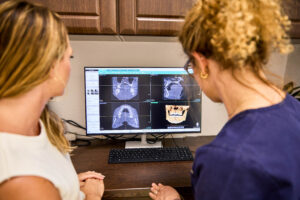
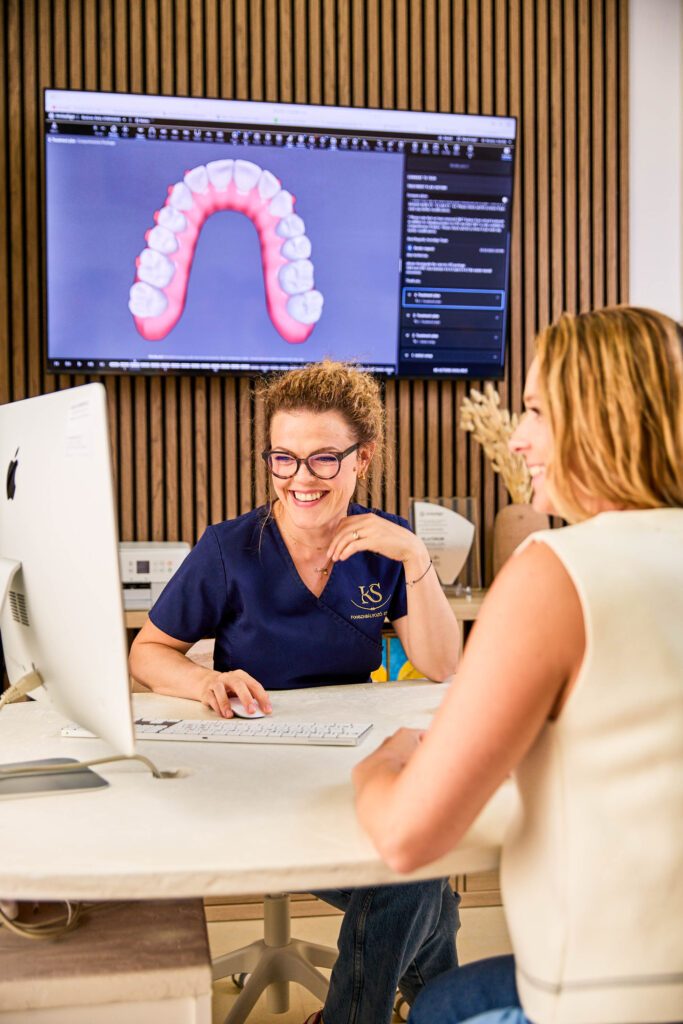
For me, smile design means that before starting treatment, I use digital tools and detailed analyses to plan the final result.
This is not a cookie-cutter approach where everyone strives for the same „perfect” smile, but rather a personalised artistic process. I take into account the patient's age, gender, ethnicity, facial features and personal preferences. The goal is not a stereotypical „Hollywood smile,” but a natural, harmonious result that best serves my patient's quality of life and everyday health.
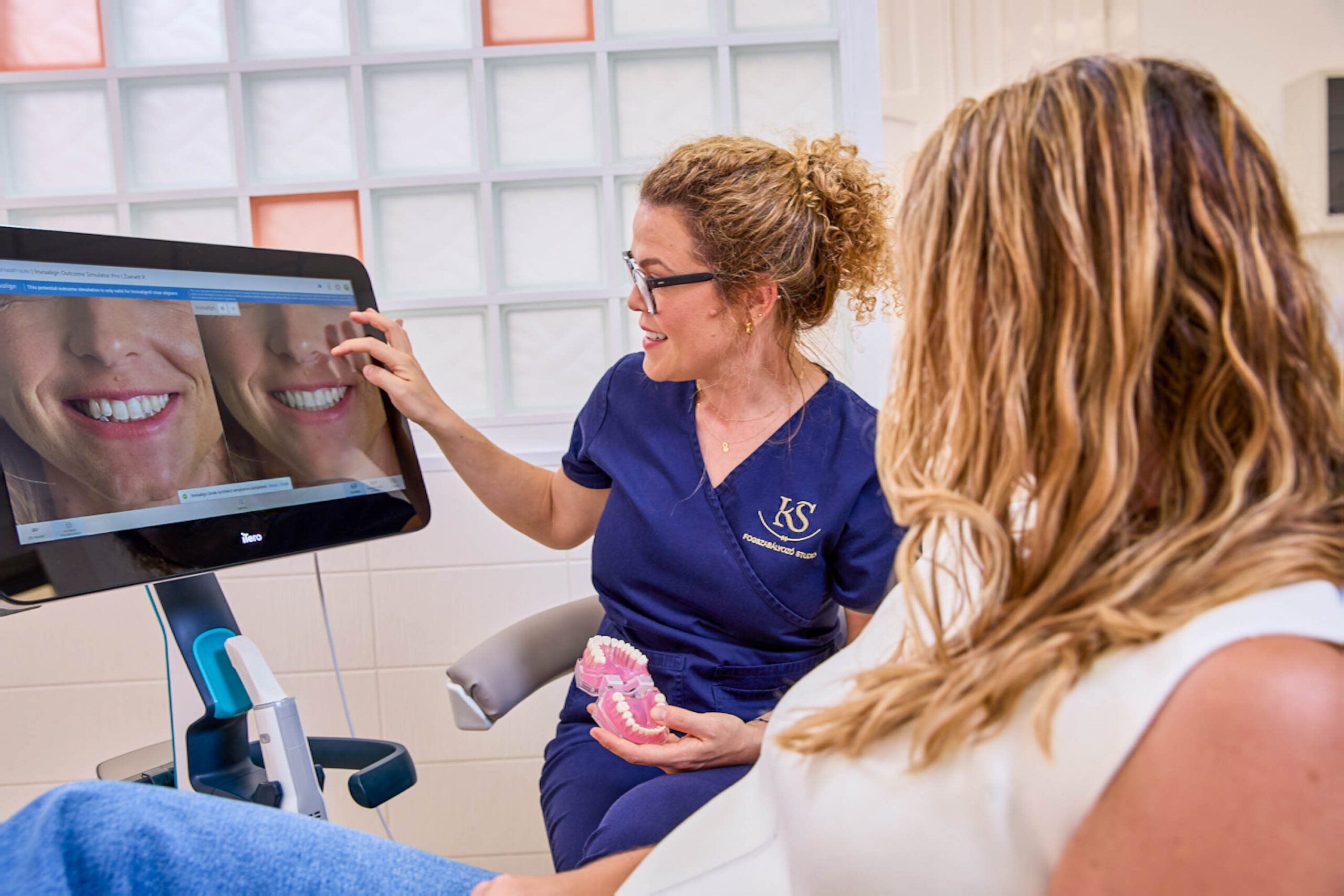
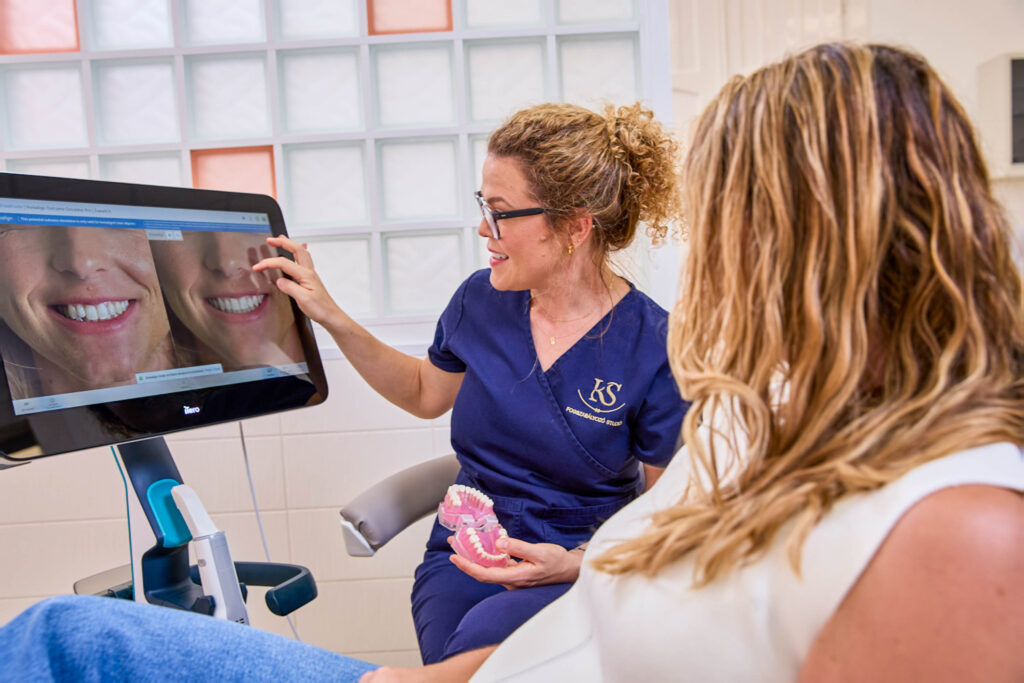
Traditional orthodontics focused primarily on the correct positioning of teeth. Smile design is much more complex: it takes into account the proportions of the entire face, the position of the lips at rest and when smiling, the visibility of the gums, and the colour and shape of the teeth. With modern technology – 3D scanning and digital smile design – patients can see the expected end result before treatment. This is not only motivating, but also allows us to fine-tune the concept together before any intervention takes place. The essence of this approach is that the patient becomes an active participant in the design of their own smile, and this makes a huge difference to the
Function and aesthetics: the dual mission of orthodontics
Oral health
Crowded, misaligned teeth are much more difficult to keep clean, so tartar often builds up in areas that cannot be cleaned, and bacteria that cause tooth decay also settle there.
Incorrect bite can lead to joint problems, headaches and wear and tear in the long term.
Difficulty breathing
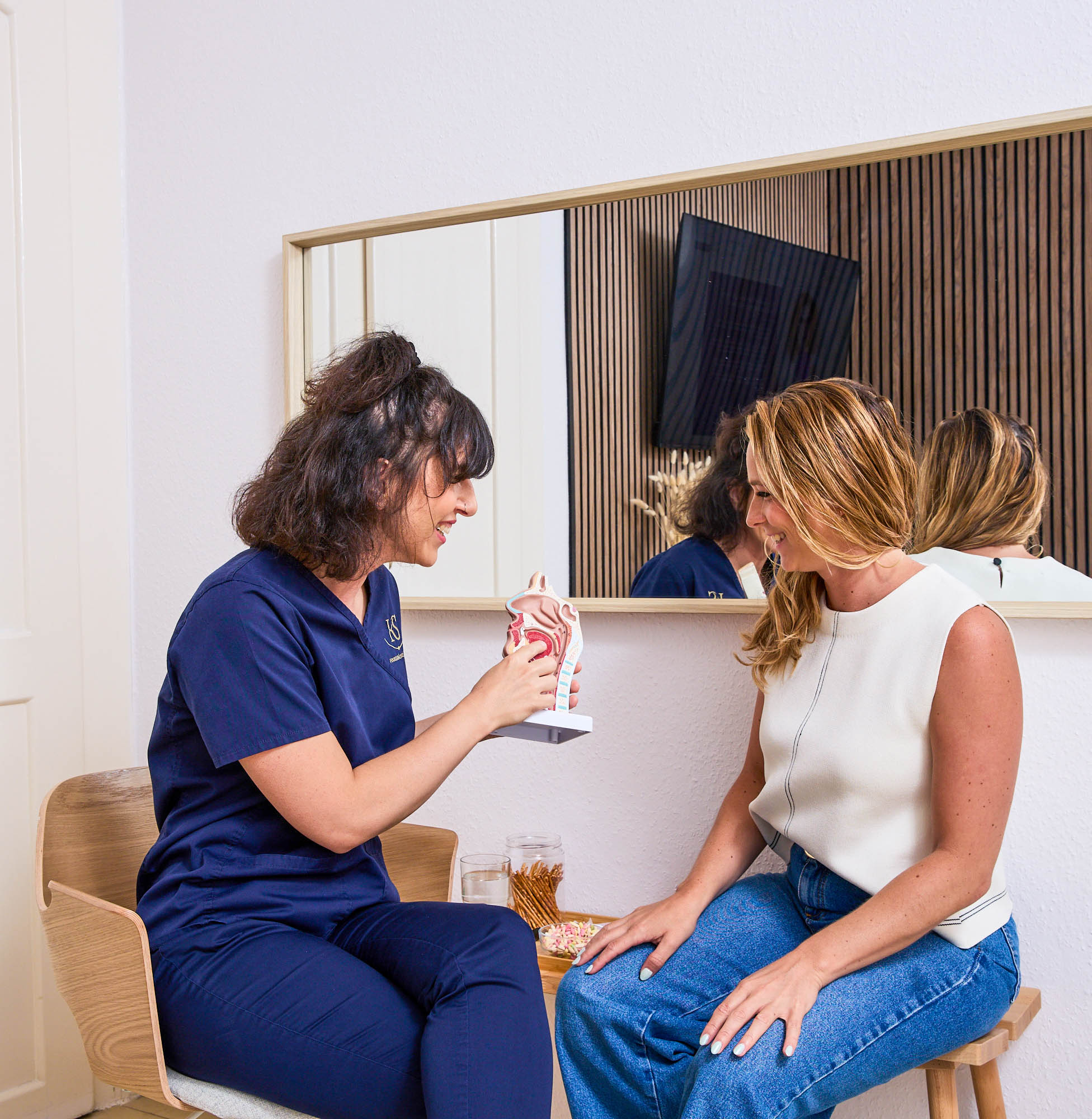
Developmental abnormalities of the oral cavity and jawbones can affect breathing.
Breathing difficulties Certain dental abnormalities prevent correct sound formation.
Digestive problems
Due to inadequate chewing, food will not be processed properly.
Modern orthodontics recognises that beautiful teeth and healthy function are inseparable. A smile may look beautiful, but it is meaningless if the patient suffers from headaches, joint problems, or is unable to chew properly or sleep.
The smile design approach I follow therefore always begins with functional health: first, it is necessary to ensure correct bite, optimal joint function and appropriate load on the teeth, and only then can aesthetic fine-tuning take place.
Functional orthodontics has a huge impact on quality of life. Many of my patients have reported that their headaches and neck pain, which had lasted for years, disappeared after their bite was corrected. Others have reported that they sleep better, snore less, or no longer have difficulty eating. These changes are often more important to patients than the aesthetic improvement itself, although the latter is also significant.
Another aspect of medical significance is prevention. Incorrect tooth alignment can lead to wear, gum disease and tooth loss in the long term. Properly aligned teeth are easier to clean, reducing the risk of decay and inflammation. Orthodontic treatment therefore not only solves current problems, but also prevents future complications for decades to come.
Smile Sculpture: Where Science Meets Art
I use the term „smile sculpting” because I really think like a sculptor in my work. A sculptor gradually shapes the raw material into the imagined form, taking into account proportions, the play of light and shadow, and harmony. I work in a similar way: I shape the teeth, the dental arches, and the relationship between the lips and the face in such a way that the end result is a natural, harmonious whole. This approach differs from traditional methods in several ways.
Detailed analysis
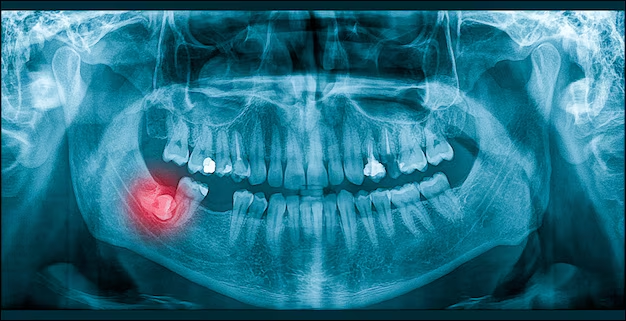
Every treatment is preceded by meticulous photographic, digital and manual analysis, where I document facial proportions, smile lines and individual characteristics.
Gradual shaping
Moving teeth is not a mechanical process, but rather an artistic endeavour, where I re-evaluate the results at every step and modify the plan if necessary.
Aesthetic refinement
At the end of the treatment, I am not satisfied with just straight teeth – I also optimise the shape and colour of the teeth and the contour of the gums for a perfect end result.
The traditional approach often follows a predetermined pattern: a specific solution for a specific problem.
In contrast, my approach always starts with the patient's individual characteristics. No two faces are alike, so no two smile designs can be alike either. Each treatment is a unique challenge, where I have to combine technical knowledge, aesthetic sense and the patient's expectations.
Technical precision
Modern tools, 3D design, precise biomechanical calculations
Artistic vision
Creating proportion, harmony and natural beauty
Personalisation
Highlighting individual characteristics, expressing personality
Innovation in orthodontics: the future is already here
Invisible braces
Transparent braces technology has advanced dramatically: today, they can be used to treat almost any dental problem, while being virtually invisible, comfortable and removable.
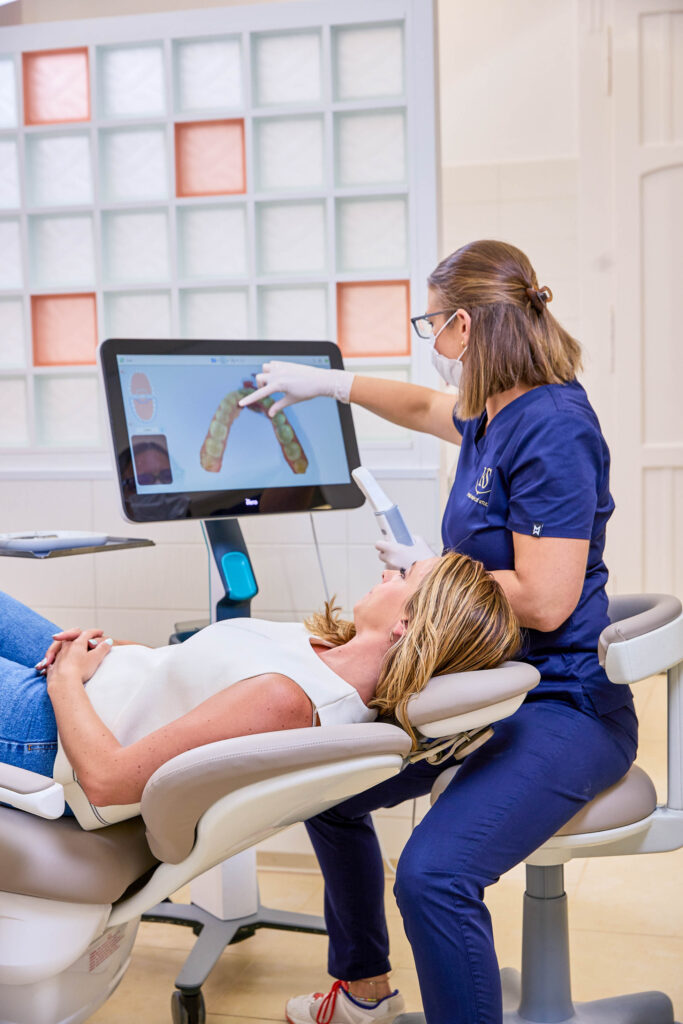
Digital fingerprinting
Instead of traditional impressions, we now use a 3D scanner to accurately and comfortably record the precise geometry of the dental arches, which leads to faster and more accurate results.
Artificial intelligence
AI-based design software helps optimise tooth movement, predict expected results and minimise treatment time.
Of all the innovations of recent years, digital orthodontic planning has been the biggest breakthrough for me. Previously, I could only describe the end result to the patient verbally. Now, however, I can use photos to show them digitally what their smile will look like after treatment. This has revolutionised communication with my patients – everyone understands exactly what to expect, and we can fine-tune the concept together.
Another exciting development is the use of micro-implants (TADs – temporary anchorage devices), which enable teeth to be moved in ways that were previously only possible with orthognathic surgery. This has significantly expanded the possibilities of conservative orthodontics. But perhaps the most important change is the shift in approach: today, we no longer focus solely on solving the problem, but proactively plan for the optimal result in all dimensions – functionally, aesthetically and in terms of long-term stability.
Innovation in orthodontics: the future is already here
Invisible braces
Transparent braces technology has advanced dramatically: today, they can be used to treat almost any dental problem, while being virtually invisible, comfortable and removable.
Digital fingerprinting
Instead of traditional impressions, we now use a 3D scanner to accurately and comfortably record the precise geometry of the dental arches, which leads to faster and more accurate results.
Artificial intelligence
AI-based design software helps optimise tooth movement, predict expected results and minimise treatment time.
Of all the innovations of recent years, digital orthodontic planning has been the biggest breakthrough for me. Previously, I could only describe the end result to the patient verbally. Now, however, I can use photos to show them digitally what their smile will look like after treatment. This has revolutionised communication with my patients – everyone understands exactly what to expect, and we can fine-tune the concept together.
Another exciting development is the use of micro-implants (TADs – temporary anchorage devices), which enable teeth to be moved in ways that were previously only possible with orthognathic surgery. This has significantly expanded the possibilities of conservative orthodontics. But perhaps the most important change is the shift in approach: today, we no longer focus solely on solving the problem, but proactively plan for the optimal result in all dimensions – functionally, aesthetically and in terms of long-term stability.
The challenges of treatment and the importance of support
The biggest challenge my patients face is the length of the process and the need for perseverance. Orthodontic treatment is not a quick fix – results take months or even years to develop. This can be particularly difficult in today's instant culture, where we expect immediate solutions to everything.
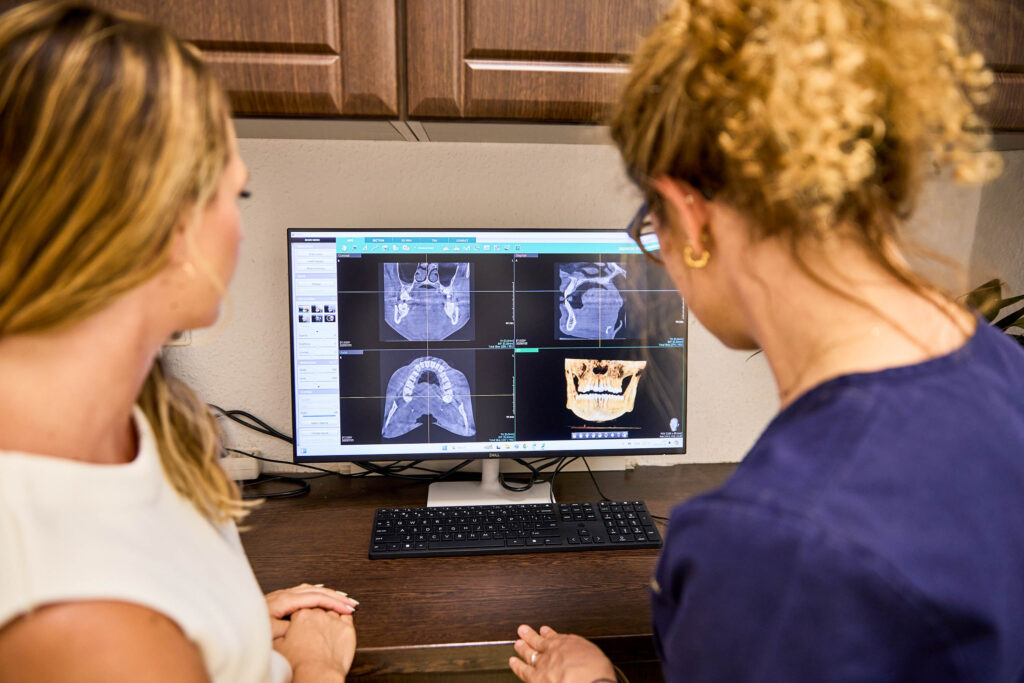
That is why we place great emphasis on continuous communication in my practice. After each check-up, we discuss the results in detail, even if they seem insignificant. I use digital technology to show where we are in relation to the entire journey.
Another important element of support is practical assistance. I provide detailed written instructions on cleaning the devices, eating, and dealing with any discomfort. My patients can ask questions at any time via an online platform, so they don't have to wait until their next check-up.
The challenges of treatment and the importance of support
The biggest challenge my patients face is the length of the process and the need for perseverance. Orthodontic treatment is not a quick fix – results take months or even years to develop. This can be particularly difficult in today's instant culture, where we expect immediate solutions to everything.
That is why we place great emphasis on continuous communication in my practice. After each check-up, we discuss the results in detail, even if they seem insignificant. I use digital technology to show where we are in relation to the entire journey.
Another important element of support is practical assistance. I provide detailed written instructions on cleaning the devices, eating, and dealing with any discomfort. My patients can ask questions at any time via an online platform, so they don't have to wait until their next check-up.
Innovation in orthodontics: the future is already here
Invisible braces
Transparent braces technology has advanced dramatically: today, they can be used to treat almost any dental problem, while being virtually invisible, comfortable and removable.
Digital fingerprinting
Instead of traditional impressions, we now use a 3D scanner to accurately and comfortably record the precise geometry of the dental arches, which leads to faster and more accurate results.
Artificial intelligence
AI-based design software helps optimise tooth movement, predict expected results and minimise treatment time.
Of all the innovations of recent years, digital orthodontic planning has been the biggest breakthrough for me. Previously, I could only describe the end result to the patient verbally. Now, however, I can use photos to show them digitally what their smile will look like after treatment. This has revolutionised communication with my patients – everyone understands exactly what to expect, and we can fine-tune the concept together.
Another exciting development is the use of micro-implants (TADs – temporary anchorage devices), which enable teeth to be moved in ways that were previously only possible with orthognathic surgery. This has significantly expanded the possibilities of conservative orthodontics. But perhaps the most important change is the shift in approach: today, we no longer focus solely on solving the problem, but proactively plan for the optimal result in all dimensions – functionally, aesthetically and in terms of long-term stability.
The challenges of treatment and the importance of support
The biggest challenge my patients face is the length of the process and the need for perseverance. Orthodontic treatment is not a quick fix – results take months or even years to develop. This can be particularly difficult in today's instant culture, where we expect immediate solutions to everything.
That is why we place great emphasis on continuous communication in my practice. After each check-up, we discuss the results in detail, even if they seem insignificant. I use digital technology to show where we are in relation to the entire journey.
Another important element of support is practical assistance. I provide detailed written instructions on cleaning the devices, eating, and dealing with any discomfort. My patients can ask questions at any time via an online platform, so they don't have to wait until their next check-up.
Prevention: the most valuable investment
Prevention and early orthodontic intervention are particularly important areas of my work. I am convinced that many serious problems can be prevented or significantly alleviated if developmental disorders are recognised and treated in time. Orthodontic treatment in childhood and adolescence is not merely a matter of aesthetics – it ensures the proper development of the face, jawbones and entire masticatory system.
Early screening (ages 5–7)
Initial orthodontic examination, monitoring of development, preventive advice if necessary
Interceptive treatment (ages 7–10)
Minor interventions that guide growth and prevent more serious problems from developing
Comprehensive treatment (ages 11–14)
Optimal arrangement of permanent teeth when all teeth have erupted
Long-term stability
Retention tools and regular monitoring to maintain results
The benefits of prevention
- Shorter and simpler treatments
- Less invasive methods are required
- Lower costs in the long term
- Better results and stability
- Less psychological burden during adolescence
What do we treat early on?
- Correction of crossbite
- Jawbone growth disorders
- Harmful habits (thumb sucking, tongue thrusting, etc.)
- Widening of narrow jawbones
I often encounter adult patients who say, „I wish they had done this when I was a child!” Early intervention takes advantage of natural growth, which makes correction much easier. What can be achieved in a few months at the age of 8-10 with simple tools may require surgical intervention at the age of 20. This does not mean that all children need early treatment, but it is worth examining all children in good time to find out if intervention is necessary.
The foundations for a lifelong healthy smile are laid in childhood – and prevention is always cheaper, simpler and more effective than later correction.
Innovation in orthodontics: the future is already here
Invisible braces
Transparent braces technology has advanced dramatically: today, they can be used to treat almost any dental problem, while being virtually invisible, comfortable and removable.
Digital fingerprinting
Instead of traditional impressions, we now use a 3D scanner to accurately and comfortably record the precise geometry of the dental arches, which leads to faster and more accurate results.
Artificial intelligence
AI-based design software helps optimise tooth movement, predict expected results and minimise treatment time.
Of all the innovations of recent years, digital orthodontic planning has been the biggest breakthrough for me. Previously, I could only describe the end result to the patient verbally. Now, however, I can use photos to show them digitally what their smile will look like after treatment. This has revolutionised communication with my patients – everyone understands exactly what to expect, and we can fine-tune the concept together.
Another exciting development is the use of micro-implants (TADs – temporary anchorage devices), which enable teeth to be moved in ways that were previously only possible with orthognathic surgery. This has significantly expanded the possibilities of conservative orthodontics. But perhaps the most important change is the shift in approach: today, we no longer focus solely on solving the problem, but proactively plan for the optimal result in all dimensions – functionally, aesthetically and in terms of long-term stability.
The challenges of treatment and the importance of support
The biggest challenge my patients face is the length of the process and the need for perseverance. Orthodontic treatment is not a quick fix – results take months or even years to develop. This can be particularly difficult in today's instant culture, where we expect immediate solutions to everything.
That is why we place great emphasis on continuous communication in my practice. After each check-up, we discuss the results in detail, even if they seem insignificant. I use digital technology to show where we are in relation to the entire journey.
Another important element of support is practical assistance. I provide detailed written instructions on cleaning the devices, eating, and dealing with any discomfort. My patients can ask questions at any time via an online platform, so they don't have to wait until their next check-up.